Most people use AI as a chat window. You open it, ask a question, get an answer, close it. Nothing carries over. Tomorrow it has forgotten you exist.
For the last several months I've been running something different. A personal AI agent that lives alongside me, remembers context across sessions, and actually runs parts of my day. It's called Hermes, built by Nous Research, and this is an honest look at what that's like, minus anything private.
What makes it different from a chatbot
The core difference is memory and continuity. My agent has persistent memory. It knows my working style, my preferences, the projects I'm on, and the rules I've given it. When I open a new session, it doesn't start from zero.
It also has two things a plain chatbot doesn't. Skills, which are saved procedures for specific jobs, so it doesn't relearn the same task every time. And scheduled jobs, which means it can act on its own on a schedule, without me prompting it.
That combination is where it stops feeling like a tool and starts feeling like a system.
How it runs my work
Here's the actual rhythm.
Every morning there's a check-in. It asks what's on deck for the day, and I tell it. It saves that plan. Then in the evening, a briefing comes back and scores my plan against what I actually did. What got done, what slipped, what I said I'd do and didn't.
That sounds small. It isn't. Having something quietly holding you to your own stated plan changes how you spend the day. You stop drifting, because you know a mirror is coming at the end of it.
Beyond the rhythm, it does the grunt work. It writes and publishes content once I approve it. It reviews code and catches dumb mistakes before they ship. It breaks big tasks into smaller ones and hands pieces off to sub-agents that run in parallel. When I'm working from a remote server, it does the deployment work I'd rather not babysit.
The pattern is always the same. I make the decisions. It handles the execution and the follow-through.
How it helps with my personal life
This is the part I didn't expect to matter so much.
There's a daily check-in that asks how I'm doing, not just what I'm doing. Health habits, how I'm sleeping, whether I actually got to the things that keep me steady rather than just the things that keep me busy. It doesn't lecture. It just notices and asks.
It logs the small stuff over time, so patterns show up that I'd otherwise miss. The weeks I'm consistent and the weeks I collapse. When I mention something personal, it remembers, and it doesn't make me repeat myself.
It also keeps track of my commitments and resurfaces them at the right moment. Not as nagging. More like a quiet assistant who actually remembers what you told them three weeks ago.
Having something that pays attention to the whole picture, work and life together, makes it much harder to lie to yourself about how things are going.
It doesn't stop at the laptop
The part that still surprises me is where it runs.
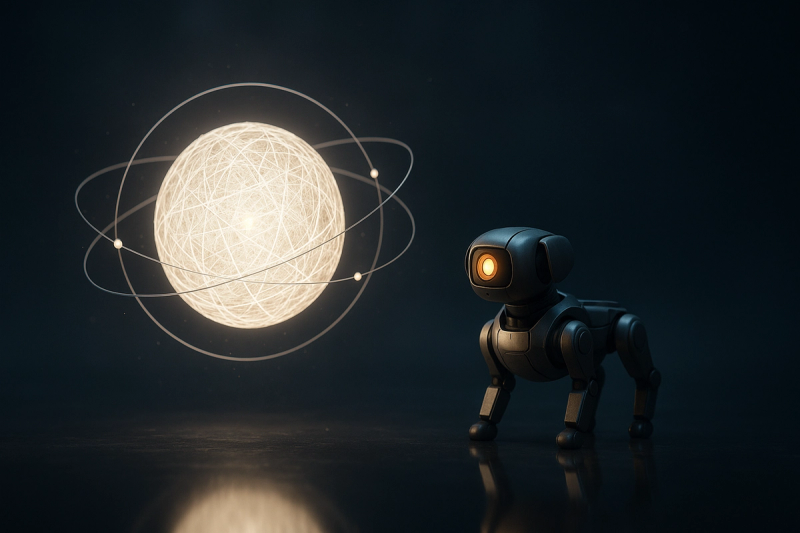
The same agent, the same memory, doesn't just sit on a server somewhere. I've been learning robotics this year, and I run it inside a robot dog too. The dog is a Hiwonder PuppyPi, a quadruped powered by a Raspberry Pi 5, with a camera for vision and a set of servos for legs.
My agent runs on it. It handles the voice loop, so I can talk to the dog and have it actually respond. It reads what the camera sees. And it connects my words to the motors, which means the same thing that writes my code can also tell a robot to walk.
The novelty isn't the point. What matters is that one agent follows me across surfaces. The system that runs my morning check-in can also drive a robot dog, because it's the same brain pointed at different hardware. Once you see it work in two places that different, you stop thinking of it as an app and start thinking of it as infrastructure.
The part that surprised me
I thought the value would be speed. Getting more done, faster.
What actually changed was the consistency. My work and my personal routines started running on the same rails instead of me trying to hold both in my head at once. The agent holds the structure so I can spend my energy on the actual decisions.
There's also a strange honesty it creates. When an agent tracks your plan and reports back, you get a much clearer picture of yourself than you get from memory. Memory flatters you. A log does not.
The honest catch
This only works if you're careful about privacy.
A system like this touches a lot of your life. I keep personal details out of anything public, and I'm deliberate about what gets stored and where. If you build something like this, treat the private data as genuinely private, because it is.
The other catch is that you have to actually use it. An agent that runs your day is only as good as the routines you give it. Set it up, then commit to the rhythm. Half-used, it's just a more complicated chatbot.
And it is not a replacement for your own judgment. It holds the plan and does the work. You still have to decide what the plan is, and what actually matters. That part never gets delegated.
What I'd tell anyone starting out
Start with one routine. A daily check-in, or an evening review. Get used to having something hold that for you. Then add another when the first one sticks.
Don't try to automate your whole life on day one. Build it the way you'd build any system, one reliable piece at a time.
The tools are here now. The people who get the most out of them aren't the ones with the fanciest setup. They're the ones who show up every day and use them with intent.
You can read the Hermes docs, or grab the source on GitHub and try it yourself.